How do I market a restaurant or cafe using digital marketing in Australia?
Discover the most effective digital marketing strategies to promote your restaurant or cafe in Australia and attract more customers through SEO, social media, and local search.
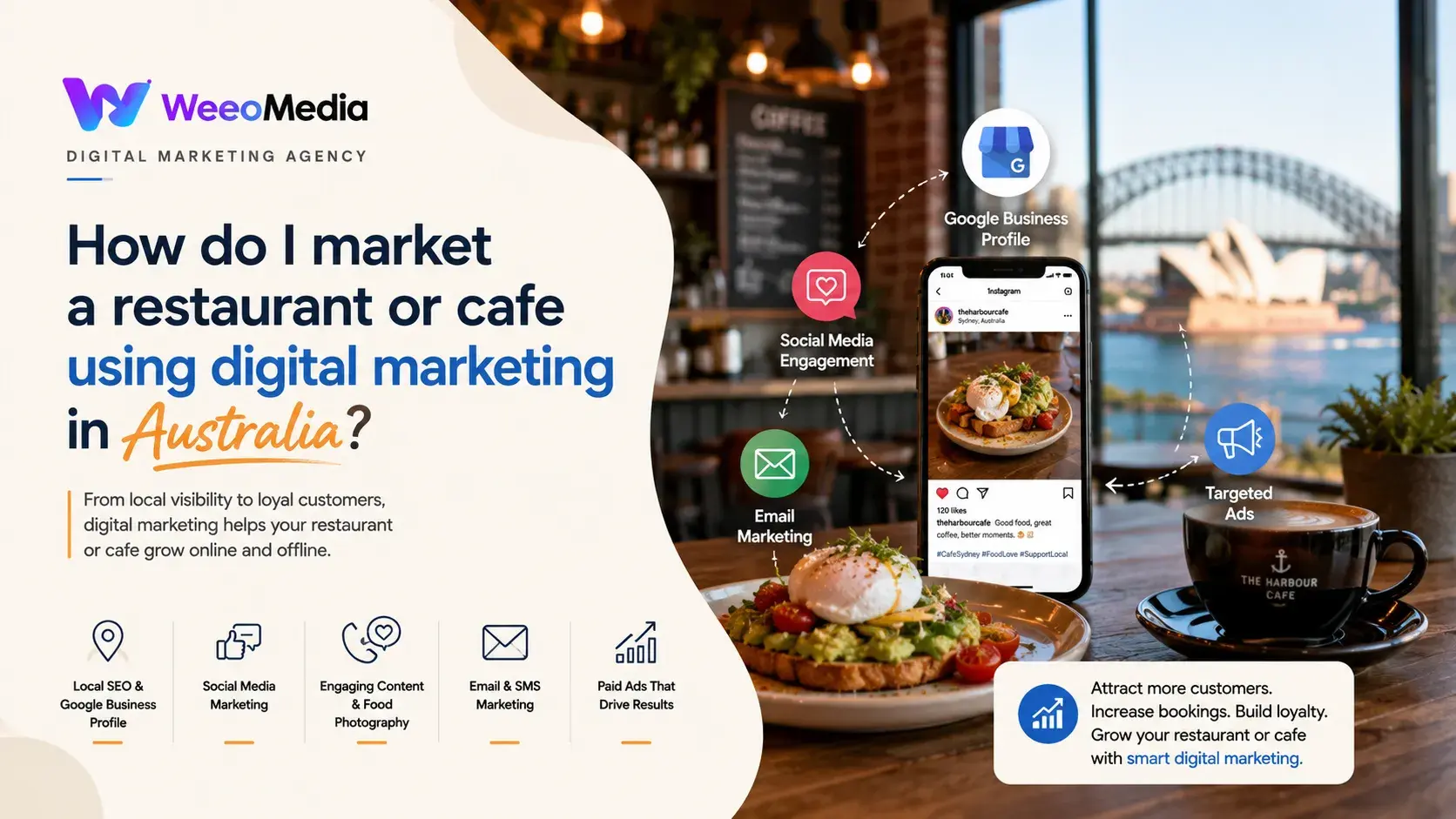
Running a successful restaurant or cafe in Australia is more than just serving great food. In today's competitive dining landscape, you need a strong digital presence to attract new customers, retain loyal ones, and grow your brand. Whether you own a cozy brunch spot in Melbourne or a busy cafe in Sydney, using the right digital marketing strategies can make a significant difference to your bottom line.
This guide walks you through the most effective and up-to-date ways to market your food business online in Australia, keeping in mind the latest Google SEO updates and how they impact your visibility.
Build a Strong Google My Business Profile
One of the most powerful tools for any food business is Google My Business (now known as Google Business Profile). For restaurant digital marketing Australia, this is your starting point. When someone searches for "cafes near me" or "best breakfast in Brisbane," your Google Business Profile determines whether you show up in those local results.
Make sure your profile is fully completed with accurate business hours, address, phone number, photos, and menu details. Encourage happy customers to leave reviews, and always respond to them, whether positive or negative. Consistent and active management of your profile signals trustworthiness to Google and helps your ranking in local search results.
Invest in Local SEO for Restaurants
Local SEO for restaurants is a critical component of your digital strategy. Google's Helpful Content updates have made it clear that search engines now prioritise content that genuinely serves users rather than content stuffed with keywords. This means your website needs to provide real value, fast loading speeds, and a great mobile experience.
Start by optimising your website with location-based keywords naturally woven into your content. Your homepage, menu page, and About page should mention your suburb or city alongside your cuisine type. For example, "family-friendly Italian restaurant in Parramatta" is more effective than a generic term. Adding structured data markup (schema) for restaurants also helps Google understand your content and display rich results like star ratings and opening hours directly in search.
Use Social Media Marketing for Cafes and Restaurants
Social media marketing for cafes has become one of the most effective ways to reach and engage local audiences in Australia. Platforms like Instagram, Facebook, and TikTok are where Australians discover new places to eat. High-quality food photography, behind-the-scenes stories, and short-form video content perform exceptionally well.
Post consistently and use location-based hashtags relevant to your area, such as #MelbourneCafe, #SydneyFoodie, or #BrisbaneBrunch. Engage with your followers by responding to comments and messages promptly. Collaborate with local food bloggers or micro-influencers who have an engaged local following. This type of authentic, community-driven content aligns perfectly with what Google's E-E-A-T (Experience, Expertise, Authoritativeness, and Trustworthiness) guidelines reward.
Run Targeted Paid Ads for Online Food Marketing
Organic strategies take time, so combining them with paid advertising is a smart approach for online food marketing Australia. Google Ads and Meta Ads (Facebook and Instagram) allow you to target people in specific suburbs, age groups, and interest categories. You can run promotions for weekend specials, new menu launches, or seasonal events.
A well-targeted ad campaign with a clear call to action, like "Book a Table Now" or "Order Online Today," can deliver a strong return on investment. Keep your ad copy simple, visually appealing, and relevant to your location and offering. Always track your results using Google Analytics 4 (GA4) and Meta Ads Manager to understand which campaigns are performing best.
Create Valuable Content Through a Restaurant Blog or Video Series
Content marketing remains one of the most sustainable long-term strategies for restaurant SEO tips. A regularly updated blog on your website can attract organic traffic from people searching for things like "best vegan dishes in Adelaide" or "how to make barista coffee at home." When your restaurant or cafe becomes a trusted source of helpful content, Google rewards you with better search rankings.
Video content is equally powerful. A short recipe video, a tour of your kitchen, or a "meet the chef" feature can build a genuine connection with your audience. Upload these to YouTube, Instagram Reels, and TikTok to maximise your reach. Cafes and restaurants that invest in video content consistently see higher engagement rates and brand recall.
List Your Business on Online Food Directories and Review Platforms
Getting your business listed on platforms like Zomato, TripAdvisor, Yelp Australia, and OpenTable increases your online visibility significantly. These sites rank well in Google search results and are often the first touchpoint for diners researching where to eat. Keeping your listings accurate, updated, and well-reviewed contributes directly to your local SEO performance.
Cafe marketing strategies that include active management of these third-party listings tend to outperform those that rely solely on social media. Ask satisfied customers to leave reviews after their visit, and make it easy for them by sending a follow-up message with a direct link.
Build an Email Marketing List and Loyalty Program
Email marketing is one of the most cost-effective digital channels available to food businesses. Collecting customer emails through your website, WiFi login, or loyalty sign-up allows you to communicate directly with people who already know and like your business. Send newsletters featuring seasonal menus, upcoming events, exclusive discounts, and behind-the-scenes stories.
Pairing your email strategy with a simple loyalty program, whether it is a digital stamp card or a points system, increases repeat visits and customer lifetime value. Tools like Mailchimp, Klaviyo, or even Square's built-in marketing features make this accessible for small cafe and restaurant owners in Australia.
Optimise for Mobile and Voice Search
A growing number of Australians are using voice search to find food options nearby. Phrases like "Hey Siri, find a cafe near me" or "OK Google, best pizza in Fitzroy" are increasingly common. Optimising for conversational, question-based queries is now a key part of restaurant digital marketing Australia.
Ensure your website is fully mobile-optimised, loads in under three seconds, and offers a seamless experience for users on smartphones. Google's mobile-first indexing means your mobile site is the version Google primarily uses to rank your pages. A slow or difficult-to-navigate mobile site will hurt your rankings and drive potential customers away.
Use User-Generated Content to Build Trust
Encouraging customers to share photos and tag your restaurant on social media is one of the most authentic forms of digital marketing. User-generated content (UGC) builds social proof and trust, which are key factors in both purchasing decisions and Google's E-E-A-T standards. Repost customer content with their permission and create a branded hashtag that makes it easy to find and collect.
Running small contests or giveaways where customers post a photo with your hashtag in exchange for a chance to win a free meal or discount voucher is an effective way to generate UGC quickly. This strategy is especially effective for cafe marketing strategies targeting younger demographics in cities like Sydney, Melbourne, and Brisbane.
Track, Measure, and Improve Consistently
No digital marketing strategy is complete without consistent tracking and analysis. Use Google Analytics 4, Google Search Console, and your social media insights to understand what is working and what needs improvement. Look at metrics like website traffic, bounce rate, click-through rate, and conversion rate regularly.
The latest Google algorithm updates reward websites that demonstrate consistent improvement and relevance over time. Stay updated on changes to the algorithm, invest in your content quality, and revisit your keyword strategy every few months to stay competitive in the Australian dining market.
Frequently Asked Questions
Q1. What is the best digital marketing strategy for a restaurant in Australia?
A combination of Google Business Profile optimisation, local SEO, social media marketing, and email campaigns tends to deliver the best results for Australian restaurants. Start with local SEO and Google My Business as your foundation, then layer in social media and paid ads as your budget grows.
Q2. How important is local SEO for restaurants and cafes?
Local SEO is extremely important for food businesses. The majority of dining decisions are made by people searching on Google with location-based terms. Appearing in the local "map pack" on Google significantly increases foot traffic and reservations.
Q3. Which social media platform works best for cafe marketing in Australia?
Instagram and TikTok are the most effective platforms for cafes due to their visual nature. Facebook remains valuable for older demographics and community groups. A multi-platform approach combining Instagram for imagery and TikTok for video reach is recommended.
Q4. How do I get more Google reviews for my restaurant?
The most effective method is to simply ask. Train your staff to request reviews at the point of payment or after a positive interaction. You can also send a post-visit email or SMS with a direct link to your Google review page to make the process as easy as possible.
Q5. Is paid advertising worth it for small cafes?
Yes, especially for targeted local campaigns. Even a modest daily budget on Google Ads or Facebook Ads can deliver strong results if your targeting is precise and your offer is compelling. Start with a small test budget, analyse the results, and scale what works.
Q6. How often should I post on social media for my restaurant?
Posting three to five times per week on Instagram and Facebook is generally recommended for consistent engagement. For TikTok, more frequent posting tends to increase reach. Quality and consistency matter more than volume.
Q7. What does Google E-E-A-T mean for restaurant websites?
E-E-A-T stands for Experience, Expertise, Authoritativeness, and Trustworthiness. For restaurants, this means your website and content should reflect real experience, accurate information, positive customer reviews, and a professional presentation. It influences how Google evaluates and ranks your site.
Q8. Do I need a website for my cafe or can I just use social media?
While social media is essential, having your own website gives you full control over your brand, SEO, online bookings, and customer data. A website is a long-term asset that social media profiles cannot replace. Ideally, use both together for maximum impact.