How to Grow a Yoga or Wellness Studio Through Digital Marketing in Australia
Learn how to use digital marketing to grow your yoga or wellness studio in Australia with actionable strategies for SEO, social media, email marketing, and more. Keywords: yoga studio digital marketing Australia, wellness studio marketing, grow yoga business online, local SEO for yoga studio, yoga studio social media marketing, online marketing for wellness centres, yoga studio website SEO, digital marketing for health and wellness
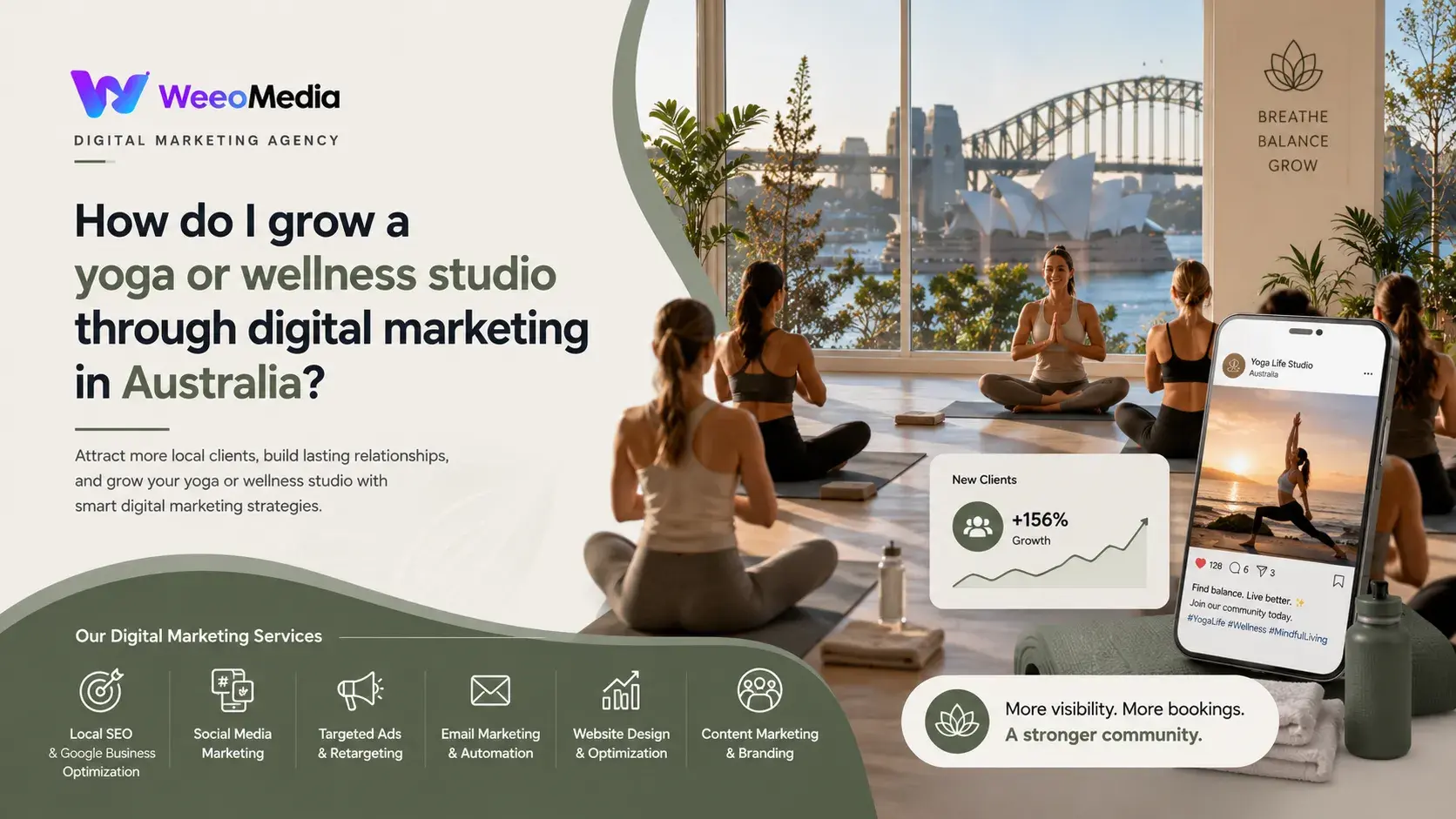
Grow Your Yoga Studio with Digital Marketing in Australia
Running a yoga or wellness studio in Australia is deeply rewarding, but growing it in a competitive market requires more than word-of-mouth. With thousands of studios across Sydney, Melbourne, Brisbane, and beyond, standing out demands a smart and consistent digital marketing strategy. Whether you are just starting out or looking to scale, the right online approach can bring more students through your door and build a loyal community around your brand.
This guide walks you through practical, proven steps to grow your yoga or wellness studio using digital marketing tailored specifically for the Australian market.
Build a Strong Foundation with a SEO-Optimised Website
Your website is the digital front door of your studio. Before investing in ads or social media, make sure your website is fast, mobile-friendly, and built around the right keywords. Yoga studio website SEO is not about stuffing pages with keywords, it is about creating genuinely helpful content that answers what your audience is searching for.
Start with clear service pages for each class type you offer, whether that is Hatha, Vinyasa, Yin, Pilates, or meditation. Each page should have a unique title, a focused meta description, and content that speaks directly to the person searching. Include location-based terms naturally throughout your pages. For example, "yoga classes in Bondi Beach" or "wellness studio in Carlton" helps search engines connect your studio to nearby searchers.
Google's latest helpful content updates reward websites that demonstrate genuine expertise, experience, and value. Avoid thin content or pages that exist only to rank. Write as though you are speaking to a real student who wants to understand your studio's philosophy, schedule, and pricing before walking in.
Use Local SEO to Attract Nearby Students
Local SEO for yoga studio growth is one of the highest-return strategies available to small wellness businesses in Australia. Most people searching for yoga classes are looking within their suburb or a short drive away. Ranking in the Google Map Pack for terms like "yoga studio near me" or "Pilates classes Melbourne" can drive consistent, free traffic to your business.
Claim and fully optimise your Google Business Profile. Add your studio's name, address, phone number, class schedule, photos, and a compelling description. Encourage satisfied students to leave genuine Google reviews as these directly influence your local ranking and build social proof for new visitors.
Ensure your Name, Address, and Phone Number (NAP) details are consistent across every directory, including True Local, Yellow Pages, and Yelp Australia. Inconsistencies confuse search engines and can hurt your local ranking. Citations from locally relevant directories also signal to Google that your studio is a legitimate, established business in the community.
Create Content That Educates and Inspires
Content marketing is one of the most sustainable long-term strategies for online marketing for wellness centres. When you publish blog posts, videos, or guides that genuinely help your audience, you attract organic traffic, build authority, and keep existing students engaged between classes.
Think about what your ideal student is searching for. Topics like "how to start yoga as a beginner in Australia," "best breathing exercises for stress," or "what to expect from your first hot yoga class" all answer real questions. These types of posts bring in people at the top of the funnel who may not yet be ready to book but are building trust with your brand.
Video content is particularly powerful in the wellness space. Short tutorials on Instagram Reels or YouTube, a behind-the-scenes look at your studio, or instructor introductions make your brand feel warm and personal. Australians respond strongly to authenticity, so let your studio's genuine culture and values come through in every piece of content you create.
Leverage Social Media to Build a Loyal Community
Yoga studio social media marketing is about more than posting pretty photos of poses. It is about creating a sense of belonging that attracts your ideal students and keeps them coming back. Instagram, Facebook, and TikTok are the dominant platforms for wellness brands in Australia, and each serves a different purpose.
Instagram works best for aspirational and educational content such as pose tutorials, wellness tips, student spotlights, and behind-the-scenes moments. Facebook remains effective for community building, event promotion, and connecting with local groups. TikTok, while newer for wellness studios, offers enormous organic reach if you can create relatable, entertaining content around yoga and mindfulness topics.
Post consistently rather than in bursts. A content calendar helps you plan ahead so you are not scrambling for ideas last minute. Use local hashtags like #sydneyyoga, #melbournewellness, or #brisbanepilates alongside broader ones to maximise your reach within the Australian market. Engage with comments and direct messages promptly as this signals trust and builds real relationships with your audience.
Run Targeted Paid Advertising for Faster Growth
Organic growth takes time, and if you want to fill your timetable faster, wellness studio marketing through paid advertising can accelerate results significantly. Google Ads and Meta Ads (Facebook and Instagram) are the two most effective paid channels for yoga and wellness studios in Australia.
With Google Ads, you can appear at the top of search results immediately for high-intent keywords like "yoga classes Brisbane" or "meditation workshop Sydney." This is particularly useful for promoting new class packages, workshops, or special introductory offers. Set a clear budget, use location targeting to focus on your suburb or city, and write ad copy that speaks directly to the problem your student wants to solve.
Meta Ads allow you to target by location, age, interests, and behaviour, making it possible to reach Australians who have shown interest in yoga, mindfulness, fitness, or holistic health. Use strong visuals, a clear offer, and a simple call to action. A free trial class, a discounted first-month pass, or a free wellness guide are all effective lead magnets that lower the barrier to entry for new students.
Build an Email List and Nurture Your Students
Email marketing remains one of the most cost-effective channels in grow yoga business online strategies. Unlike social media, your email list is an asset you own. Algorithm changes or platform outages cannot take it away from you.
Offer something valuable in exchange for an email address, such as a free beginner's yoga guide, a meditation audio, or access to an exclusive online class. Once someone joins your list, send a welcome sequence that introduces your studio, your instructors, your values, and your classes. Ongoing newsletters can share timetable updates, upcoming workshops, student stories, and wellness tips.
Segment your list over time so new students receive different content from long-term members. Personalisation increases open rates and keeps your audience engaged. Tools like Mailchimp, ActiveCampaign, or Klaviyo make it straightforward to set up automated sequences without needing a large marketing team.
Collaborate with Local Businesses and Influencers
Growing your studio does not always require paid ads. Partnerships with complementary local businesses, such as health food cafes, naturopaths, physiotherapists, and sportswear stores, can introduce your studio to new audiences at low or no cost. Digital marketing for health and wellness thrives when brands support each other rather than compete.
Micro-influencers in the Australian wellness space, those with between 5,000 and 50,000 engaged followers, often deliver better results than larger accounts because their audiences trust them personally. Invite a local yoga blogger or a fitness-focused content creator to attend a class in exchange for an honest post or Story. This type of word-of-mouth amplified by social media can bring in a wave of new students who already align with your studio's values.
You can also host joint events, pop-up classes in local parks, or charity sessions that generate community goodwill and press coverage. These activities build brand awareness while reinforcing your position as a genuine part of the local wellness community.
Track Your Results and Refine Your Strategy
No digital marketing strategy works without measurement. Install Google Analytics 4 on your website and connect it to Google Search Console so you can track which pages drive the most traffic, where visitors are dropping off, and which keywords are bringing people to your site. Monitor your Google Business Profile insights to see how many people are clicking for directions or calling your studio.
On social media, track engagement rate, reach, and follower growth over time rather than obsessing over individual post performance. For paid ads, focus on cost per lead and cost per new student rather than impressions or clicks alone.
Review your results monthly and be willing to adjust. yoga or wellness studio digital marketing in Australia is not a one-size-fits-all formula. What works for a studio in Byron Bay may look very different from one in Melbourne's CBD. Staying curious, testing new approaches, and doubling down on what works is the key to sustainable growth.
Frequently Asked Questions
Q1. How long does it take to see results from digital marketing for a yoga studio in Australia?
SEO and content marketing typically take three to six months to build measurable momentum, while paid advertising can generate results within days. A combined approach tends to deliver the best short and long-term outcomes for most studios.
Q2. How much should a yoga studio spend on digital marketing in Australia?
A small studio starting out can see meaningful results with $500 to $1,500 per month covering a mix of paid ads, content creation, and email marketing. Larger studios or those in highly competitive cities like Sydney or Melbourne may invest more, particularly in paid channels.
Q3. Which social media platform is best for promoting a yoga or wellness studio?
Instagram is generally the most effective platform for yoga and wellness studios in Australia due to its visual nature and engaged health-conscious community. However, TikTok is growing rapidly and can deliver exceptional organic reach for studios willing to create short-form video content.
Q4. Do I need to hire a digital marketing agency to grow my wellness studio online?
Not necessarily. Many studio owners manage their own digital marketing successfully, especially in the early stages. However, as your studio grows, working with an agency or freelancer who understands the wellness industry and the Australian market can save time and improve results significantly.
Q5. What is the most important first step in digital marketing for a new yoga studio?
Setting up and fully optimising your Google Business Profile is the single most impactful first step. It costs nothing, directly improves your local search visibility, and helps new students find, trust, and contact your studio immediately.
Q6. How can I get more Google reviews for my yoga studio?
Simply ask your students directly after a positive class experience, and make it easy by sending them a direct link to your review page via email or SMS. Responding to every review, positive or negative, shows potential students that you value feedback and take your community seriously.