How Do I Choose the Right Digital Marketing Agency in Australia?
Discover a step-by-step guide to choosing the right digital marketing agency in Australia in 2026, including how to evaluate experience, assess reporting standards, avoid red flags, and find a partner genuinely aligned with your business goals.
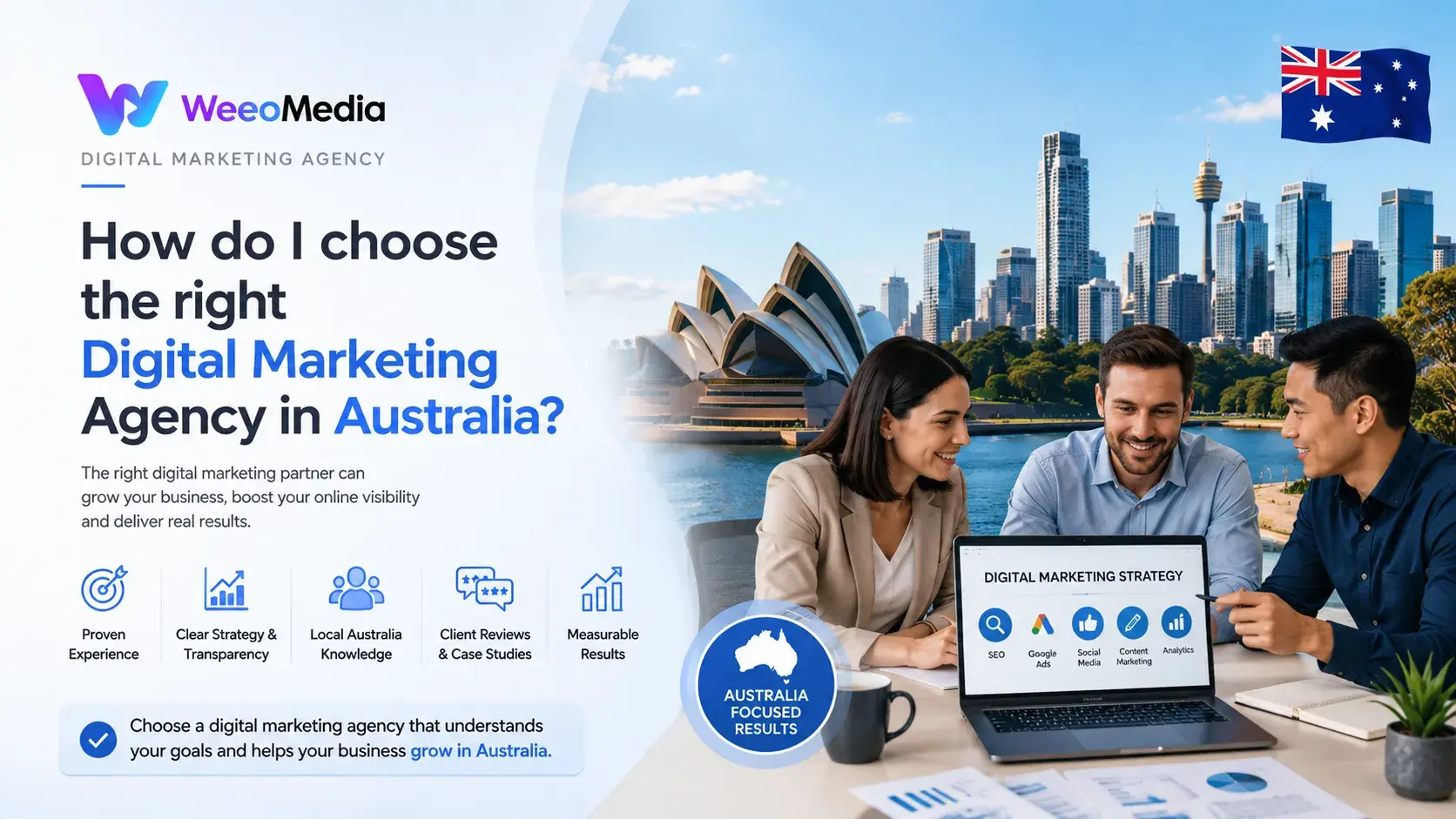
Choosing the right digital marketing agency in Australia in 2026 is one of the most consequential decisions a business owner can make. The agency you partner with will shape your online visibility, your brand reputation, your customer acquisition costs, and ultimately your revenue growth. With hundreds of agencies operating across Sydney, Melbourne, Brisbane, Perth, Adelaide, and countless regional markets, all promising first-page rankings, explosive traffic growth, and guaranteed results, the challenge is not finding an agency. The challenge is finding the right one for your specific business, goals, and budget.
The Australian digital marketing industry has matured significantly. In 2026, businesses have access to more specialist agencies, more performance data, and more transparency tools than ever before. But the market also contains more noise, more exaggerated claims, and more agencies selling templated services dressed up as custom strategies. Knowing how to evaluate, compare, and select a digital marketing agency in Australia that genuinely delivers requires a clear framework and an informed set of questions.
This guide walks you through every step of the selection process, from defining your goals and understanding different agency types to evaluating credentials, assessing culture fit, and avoiding the red flags that consistently signal a poor partnership.
Step One, Define Your Goals Before You Start Looking
The most common mistake businesses make when searching for a digital marketing agency is starting the search before they have clearly defined what they actually need. Walking into agency conversations without a clear brief is the fastest way to end up paying for services that do not align with your priorities.
Before you approach a single agency, spend time answering the following questions honestly. What specific business outcome are you trying to achieve? More website traffic, more online enquiries, more direct bookings, stronger brand awareness, or a combination of several objectives? What channels are most relevant to reaching your target audience? Is your primary need SEO, Google Ads, social media, content marketing, email marketing, or a fully integrated strategy across multiple channels? What is your realistic monthly budget, and what return on that investment would make the engagement worthwhile? What does your current digital presence look like, and what are its most significant weaknesses?
Having clear, written answers to these questions before you begin your agency search allows you to evaluate each agency against a consistent standard rather than being swayed by impressive presentations that may not address your actual needs.
Step Two, Understand the Different Types of Digital Marketing Agencies
Not all digital marketing agencies are the same, and matching the type of agency to your specific needs is an important step that many businesses overlook when searching for the best digital marketing agency in Australia.
Full-service agencies offer a broad range of digital marketing services under one roof, including SEO, paid advertising, social media management, content creation, email marketing, and sometimes web design and development. They are well suited to businesses that need comprehensive support across multiple channels and want a single point of accountability for their entire digital presence.
Specialist agencies focus on a single discipline or a narrow set of related services. SEO-only agencies, Google Ads specialists, social media agencies, and content marketing studios all fall into this category. They tend to offer deeper expertise within their chosen field than a generalist full-service agency, making them the better choice when you have a specific, clearly defined need.
Industry-specific agencies serve clients exclusively within a particular sector, such as tourism, hospitality, legal, healthcare, or e-commerce. Their value lies in deep familiarity with the competitive landscape, audience behaviour, regulatory environment, and seasonal dynamics of your specific industry.
Freelancers and small consultancies offer personalised, often more affordable services and are well suited to smaller businesses with focused needs. The trade-off is typically less capacity, fewer specialist resources, and greater dependency on a single individual.
Understanding which type of agency is the best structural fit for your business before you begin evaluating specific agencies saves significant time and prevents the common mistake of comparing fundamentally different service models against each other.
Step Three, Look for Relevant Industry Experience
In 2026, the Australian digital marketing landscape is competitive enough that relevant industry experience is a meaningful differentiator between agencies, not just a nice-to-have. An agency that has worked extensively with businesses in your sector will understand your audience's search behaviour, your competitive dynamics, your seasonal patterns, and the specific channels and content formats that resonate with your customers.
When evaluating digital marketing agency experience in Australia, look beyond the general claim of having worked across many industries. Ask specifically whether they have managed campaigns for businesses directly comparable to yours in terms of industry, size, and target audience. Request case studies that demonstrate results achieved for clients in your sector, not just impressive statistics from unrelated industries.
For example, an SEO agency that specialises in tourism and hospitality will understand the unique challenges of competing with OTA platforms, the importance of seasonal keyword strategies, and the role of local SEO in driving direct bookings. A generalist agency applying the same SEO framework it uses for a law firm or a retail store to a travel business will almost certainly underperform against a specialist with genuine sector knowledge.
Industry experience also reduces the time and cost of the onboarding process. An agency that already understands your market does not need weeks of education before they can begin adding value.
Step Four, Evaluate Their Own Digital Presence
One of the most telling and often overlooked indicators of an agency's capabilities is the quality of their own digital marketing. An SEO agency that cannot rank its own website for relevant search terms in its target city is demonstrating, whether intentionally or not, the limits of its own expertise. A social media agency with a low-engagement, sporadically updated social presence is telling you more about its real capabilities than any pitch deck ever will.
When assessing a prospective agency, take time to examine how they rank in Google for competitive terms related to their own services, the quality and consistency of their content marketing and blog output, the engagement levels on their social media profiles, the performance and user experience of their own website, and the quality of their Google Business Profile including review volume and ratings.
This is not about holding agencies to an impossible standard. Running a high-performing agency while simultaneously managing clients is genuinely demanding. But an agency that actively practices what it preaches and demonstrates at least a reasonably strong digital presence is far more credible than one that excels at selling digital marketing services while neglecting its own.
Step Five, Ask the Right Questions During Agency Meetings
The agency pitch or initial consultation is your opportunity to gather the specific information you need to make an informed decision. Generic presentations and impressive case study highlights are the agency's opportunity to put their best foot forward. Your job is to ask the questions that reveal how they actually work, who will actually work on your account, and how they will measure and report on performance.
When meeting with a prospective Australian SEO and digital marketing agency, ask the following questions directly.
Who specifically will manage my account day to day, and what is their experience level? Many agencies are won by senior strategists but serviced by junior staff. Understanding exactly who will be doing the work matters enormously.
What does your onboarding process look like, and how long before we see initial results? Unrealistic timelines are a red flag. Genuine agencies are honest about the time required to achieve meaningful outcomes.
How do you measure success, and what does your monthly reporting look like? Request a sample report to evaluate the depth and clarity of their performance communication.
What is your approach to staying current with algorithm updates and platform changes? Google's algorithms, Meta's ad platform, and the broader digital marketing landscape change constantly in 2026. Agencies that do not invest in continuous learning fall behind quickly.
Do you outsource any work to freelancers or offshore teams? Outsourcing is not inherently problematic, but understanding who is actually executing your campaigns is important for accountability and quality control.
What happens if results do not meet expectations? A reputable agency will have a clear process for reviewing strategy and adjusting approach. Vague or defensive answers to this question are a warning sign.
Step Six, Scrutinise Case Studies and Client References
Case studies are the most concrete evidence available of an agency's ability to deliver results. When reviewing case studies as part of your choosing an SEO agency in Australia process, look beyond the headline metrics and evaluate the context and credibility of the results presented.
A strong case study should clearly describe the client's situation and challenges before the engagement began, explain the specific strategy and tactics implemented, present results with specific, verifiable metrics such as percentage increases in organic traffic, improvements in keyword rankings, reductions in cost per acquisition, or growth in direct bookings, and provide a timeline that contextualises how long the results took to achieve.
Be sceptical of case studies that present very large percentage improvements without context. A 500 percent increase in organic traffic sounds impressive but means very little if the starting point was five visitors per month. Ask to speak with current or former clients directly. A reputable agency will be comfortable facilitating these conversations. Hearing from real clients about their experience, including both what went well and what challenges arose, is far more valuable than any curated case study presentation.
Step Seven, Understand Their Reporting and Communication Standards
Transparency in reporting is one of the clearest indicators of an agency's integrity and professionalism. In 2026, there is no excuse for vague, cherry-picked, or infrequent reporting. The tools available for tracking and communicating digital marketing performance are more sophisticated and accessible than ever.
A high-quality digital marketing reporting in Australia standard includes monthly reports that cover all key performance indicators relevant to your agreed objectives, clear attribution of results to specific campaigns and channels, honest commentary on what is working, what is not, and what adjustments are being made in response, and access to live dashboards so you can check performance at any time without waiting for a monthly update.
During the selection process, ask to see a sample report from an active campaign. Evaluate whether the metrics reported are genuinely meaningful to business outcomes, or whether the report is filled with vanity metrics like impressions and follower counts that look positive but do not translate into revenue.
Equally important is communication frequency and accessibility. Will you have a dedicated account manager? How quickly do they respond to questions and requests? Are monthly review calls included? Poor communication is one of the most consistently cited frustrations in agency-client relationships. Establishing clear expectations before signing a contract prevents many of these issues.
Step Eight, Assess Pricing Models and Contract Terms
Digital marketing agency pricing in Australia varies enormously in 2026, from a few hundred dollars per month for basic services from small freelancers to tens of thousands per month for comprehensive campaigns managed by large agencies. Understanding what you are paying for and how pricing structures work is essential before committing to any engagement.
The most common pricing models include monthly retainers, where you pay a fixed monthly fee for an agreed scope of services, project-based pricing for one-off deliverables like a website audit or content strategy, performance-based pricing where fees are tied to specific results such as leads generated or revenue attributable to campaigns, and hourly billing for advisory or consulting services.
For most businesses seeking ongoing digital marketing support, a monthly retainer with a clearly defined scope of work is the most practical and transparent model. Be cautious of agencies that bundle many services into a single monthly fee without specifying exactly what is included in each.
Contract terms deserve careful attention. Long lock-in contracts of 12 months or more without clear performance clauses or exit provisions are a red flag. Reputable agencies are confident in their ability to deliver results and do not need to trap clients in lengthy contracts. A reasonable initial commitment of three to six months, with rolling monthly terms thereafter, is a fair structure that protects both parties.
Step Nine, Watch for These Red Flags
The Australian digital marketing industry in 2026, like any industry, contains both exceptional practitioners and opportunistic operators who sell impressive promises and deliver mediocre results. Knowing the common red flags helps you avoid costly mistakes.
Guaranteed number one Google rankings are perhaps the most well-known red flag in the industry. No agency can genuinely guarantee specific ranking positions. Google's algorithms are complex, constantly evolving, and influenced by hundreds of factors outside any agency's control. An agency making this claim is either dishonest or dangerously uninformed.
Suspiciously low pricing that seems too good to be true almost always is. Effective digital marketing requires skilled people, quality tools, and consistent time investment. Agencies offering comprehensive SEO or ad management for very low monthly fees are almost certainly cutting corners in ways that will either deliver no results or, worse, cause harm through black-hat tactics that attract Google penalties.
Lack of transparency about their methods is a serious concern. Any reputable agency should be able to explain clearly what they will do, why they will do it, and how it will benefit your business. Vague answers about proprietary systems or secret techniques that cannot be disclosed are a warning sign.
Pressure to sign quickly without adequate time to review the proposal, ask questions, or seek a second opinion is a classic sales pressure tactic that reputable agencies do not need to employ.
No clear onboarding process or discovery phase suggests the agency applies the same templated approach to every client regardless of their specific situation, goals, and competitive context.
Step Ten, Prioritise Culture Fit and Long-Term Partnership Potential
The best digital marketing results in 2026 come from genuine partnerships built on mutual respect, honest communication, and shared commitment to long-term growth. The technical capabilities of an agency matter enormously, but so does the quality of the working relationship.
During your evaluation process, pay attention to how the agency communicates. Are they clear, honest, and direct, or do they speak primarily in jargon and avoid direct answers to direct questions? Do they ask thoughtful questions about your business, your customers, and your goals, or do they spend the majority of the conversation talking about themselves? Do they push back constructively when they disagree with your approach, or do they simply agree with everything you say?
An agency that is willing to have honest conversations, including delivering news you may not want to hear, is far more valuable than one that tells you only what you want to hear. Digital marketing agency partnerships in Australia that endure and deliver compounding results over time are built on transparency, mutual accountability, and a genuine shared interest in your business's success.
Frequently Asked Questions
How much should I budget for a digital marketing agency in Australia in 2026?
Budget requirements vary significantly depending on your industry, the competitiveness of your market, the channels you need to activate, and the size of your business. As a general guide, small businesses investing in SEO alone can expect to spend anywhere from one thousand to three thousand dollars per month for quality ongoing services. Businesses running Google Ads campaigns will typically need to budget separately for ad spend on top of management fees. Comprehensive multi-channel campaigns for medium to large businesses can range from five thousand to twenty thousand dollars or more per month. The most important consideration is not the absolute amount but the expected return relative to the investment.
How long does it take to see results from a digital marketing agency? It depends on the channels involved. Google Ads and paid social campaigns can generate traffic and leads within days of launching. SEO is a longer-term investment, with most businesses
beginning to see meaningful ranking and traffic improvements within three to six months of starting a structured campaign. Content marketing and link building compound in value over 12 months and beyond. Any agency promising dramatic SEO results within weeks is making unrealistic claims.
Should I choose a local agency or does location matter in 2026?
In 2026, the majority of digital marketing work is delivered remotely, and geographic proximity is less important than it once was. That said, there are genuine advantages to working with an agency that understands the Australian market specifically, including local search behaviour, platform preferences, seasonal patterns, and the competitive landscape of your target cities. An agency based in Sydney or Melbourne with deep Australian market knowledge will typically serve an Australian business better than an offshore agency with no local context, even if both are technically capable.
What is the difference between an SEO agency and a full-service digital marketing agency?
An SEO agency specialises exclusively in search engine optimisation, covering technical SEO, on-page optimisation, content strategy, and link building. A full-service digital marketing agency offers a broader range of services including SEO, paid search, social media management, content marketing, email marketing, and sometimes web design. If your primary need is improving organic search rankings, a specialist SEO agency often delivers deeper expertise. If you need support across multiple channels, a full-service agency provides the convenience of integrated strategy and single-point accountability.
How do I know if my digital marketing agency is actually delivering results?
Genuine results should be measurable against business outcomes, not just digital metrics. Traffic increases and ranking improvements are positive indicators, but the ultimate measure is whether your investment is generating more enquiries, bookings, leads, or sales. Your agency should provide monthly reports that clearly connect their activities to business outcomes, and you should have access to your own analytics data at all times. If your agency is reluctant to share data or cannot demonstrate a clear connection between their work and your business performance, that is a serious concern.
Can a small business afford a quality digital marketing agency in Australia?
Yes. Many reputable Australian agencies offer scaled packages designed specifically for small businesses with limited budgets. The key is being realistic about what a smaller budget can achieve and prioritising the one or two channels most likely to deliver the best return for your specific business. A modest but well-managed SEO or Google Ads investment often delivers far stronger returns than a larger budget spread thinly across too many channels without adequate focus or expertise.
What should I look for in a digital marketing agency contract?
A fair and transparent contract should clearly specify the scope of services included in the monthly fee, the key performance indicators that will be used to measure success, the reporting frequency and format, the notice period required to terminate the agreement, ownership of all assets created during the engagement including website content, ad accounts, and analytics data, and the process for resolving disputes or addressing underperformance. Be cautious of contracts that lock you into very long terms without performance clauses or that do not explicitly state you retain ownership of your own digital assets.
How many agencies should I get proposals from before making a decision?
Getting proposals from three to five agencies before making a decision is generally a good practice. This gives you enough comparison points to evaluate pricing, approach, and culture fit without becoming overwhelmed by too many options. Make sure you are comparing agencies at a similar level of specialisation and scale, and use the same brief and set of questions with each to ensure you are making a genuinely like-for-like comparison.