What is the Difference Between On-Page SEO and Off-Page SEO?
Understand the core differences between on-page SEO and off-page SEO, and discover how combining both strategies can drive higher rankings and sustainable organic growth.
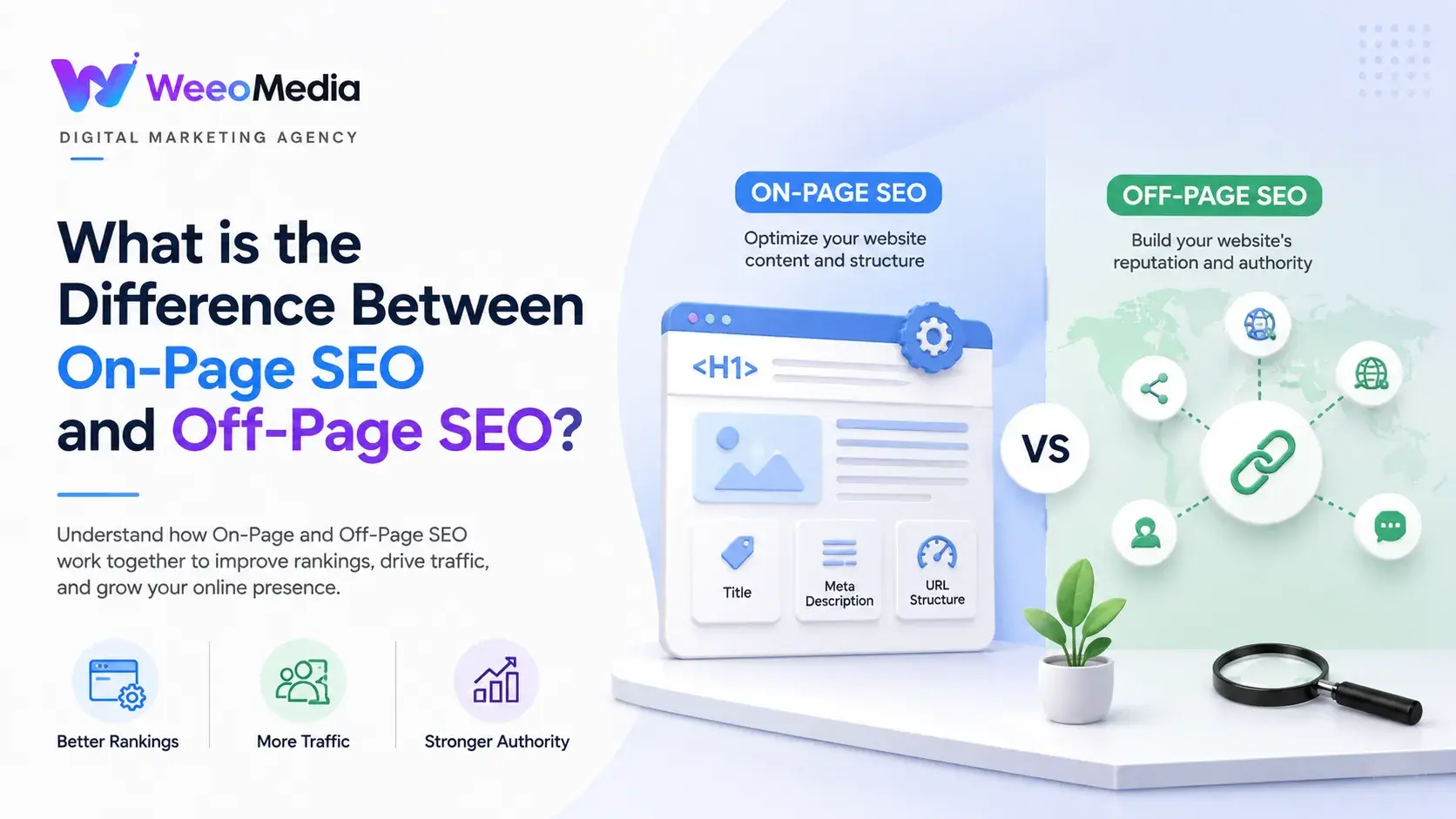
If you have ever searched for ways to improve your website's ranking on Google, you have likely come across the terms on-page SEO and off-page SEO. Both are essential components of a complete search engine optimization strategy, but they work in very different ways. Understanding the difference between the two is the first step toward building a digital presence that delivers consistent, long-term results.
In simple terms, on-page SEO refers to everything you do on your own website to improve its visibility in search results. Off-page SEO, on the other hand, refers to all the actions taken outside of your website that influence how search engines perceive your authority and credibility. Together, these two pillars form the foundation of any effective SEO strategy for websites.
What is On-Page SEO?
On-page SEO is the practice of optimizing individual web pages so that search engines can understand their content and rank them appropriately for relevant search queries. Every element that exists on your website, from the words in your content to the code in your HTML, falls under the scope of on-page SEO.
When search engines like Google crawl your website, they look at several on-page signals to determine what your page is about and how relevant it is to a user's search query. The better optimized your pages are, the easier it becomes for search engines to index and rank them correctly.
Key Elements of On-Page SEO
Title Tags and Meta Descriptions: The title tag is one of the most important on-page ranking factors. It tells both users and search engines what your page is about. A well-written title tag includes the primary keyword and stays within the recommended character limit. Meta descriptions, while not a direct ranking factor, significantly influence click-through rates from search results.
Header Tags: Using H1, H2, and H3 tags correctly helps search engines understand the structure and hierarchy of your content. Your H1 should always contain the primary keyword and clearly define the topic of the page.
Keyword Optimization: Strategic keyword placement in content is one of the core principles of on-page SEO. Keywords should appear naturally in the title, first paragraph, subheadings, and throughout the body content, without overstuffing or forcing them unnaturally.
URL Structure: Clean, descriptive URLs that include the target keyword help both users and search engines understand the page's topic. A URL like /on-page-seo-vs-off-page-seo is far more effective than /page?id=123.
Image Optimization: Every image on your page should have a descriptive file name and an ALT tag that includes relevant keywords. This not only helps with SEO but also improves accessibility for visually impaired users.
Internal Linking: Linking from one page of your website to another helps search engines discover new content, understand the relationship between pages, and distribute page authority across your site.
Content Quality and Length: Google consistently rewards content that is comprehensive, original, and genuinely useful to the reader. Thin content with little value will struggle to rank, regardless of how well other on-page elements are optimized.
Page Speed and Core Web Vitals: A slow-loading website damages both user experience and rankings. Google officially uses Core Web Vitals, which measure loading performance, interactivity, and visual stability, as ranking signals. Optimizing images, reducing server response time, and minimizing unnecessary code all contribute to better page speed.
Mobile Friendliness: With the majority of searches now happening on mobile devices, Google uses mobile-first indexing. This means Google primarily looks at the mobile version of your website to determine rankings. A responsive, mobile-friendly design is an absolute on-page necessity.
What is Off-Page SEO?
Off-page SEO refers to all optimization activities that take place outside of your website but still have a direct impact on your search engine rankings. While on-page SEO tells search engines what your content is about, off-page SEO tells them how trustworthy and authoritative your website is.
Think of off-page SEO as your website's reputation on the internet. Just as a business with many positive reviews and strong word-of-mouth referrals is trusted more than one with none, a website with strong off-page signals is considered more credible by search engines.
Key Elements of Off-Page SEO
Backlink Building: Backlinks, also known as inbound links, are links from other websites pointing to yours. This is the single most important off-page SEO factor. When a high-authority website links to your content, it passes what is known as "link equity" or "link juice" to your page, boosting its authority and ranking potential. Not all backlinks are equal, though. A single link from a highly trusted, relevant website is worth far more than dozens of links from low-quality or unrelated sites.
Domain Authority: Domain Authority is a metric developed by Moz that predicts how well a website is likely to rank on search engines. It is built primarily through acquiring high-quality backlinks over time. While Google does not use Domain Authority directly, it is a useful indicator of your website's overall link building strategy health.
Social Signals: While Google has not confirmed social media as a direct ranking factor, there is strong evidence that social engagement influences SEO indirectly. Content that gets widely shared on platforms like Facebook, LinkedIn, Twitter, and Instagram gains more visibility, attracts more backlinks, and drives more branded searches, all of which positively impact rankings.
Guest Posting: Writing and publishing articles on reputable third-party websites in your industry is one of the most effective ways to build quality backlinks, establish thought leadership, and drive referral traffic back to your website.
Brand Mentions: Even unlinked brand mentions, where another website references your brand name without providing a clickable link, are considered a positive off-page signal by search engines. Building your brand's presence through PR, influencer collaborations, and industry partnerships increases these mentions organically.
Online Reviews and Reputation: For local businesses especially, reviews on Google, Trustpilot, Justdial, and other platforms contribute to off-page authority. Positive reviews build trust with both users and search engines, particularly for local SEO ranking factors.
Forum and Community Participation: Active, genuine participation in industry forums, Q&A platforms like Quora, and community groups can drive referral traffic and improve your website's topical authority when done with value and not as spam.
On-Page SEO vs Off-Page SEO: The Core Differences
Understanding both strategies individually is important, but knowing how they differ from each other helps you prioritize your efforts and allocate resources effectively.
Control: On-page SEO is entirely within your control. You decide the content, the keywords, the structure, and the technical setup of your website. Off-page SEO, however, largely depends on the actions of third parties, such as other websites choosing to link to you or users choosing to share your content.
Timeframe: On-page SEO changes can produce results relatively quickly, sometimes within a few weeks of implementation. Off-page SEO, particularly backlink building, is a long-term investment that compounds in value over months and years.
Purpose: On-page SEO focuses on relevance, helping search engines understand what your content is about. Off-page SEO techniques focus on authority, helping search engines understand how trusted and credible your website is among others in your industry.
Effort and Resources: On-page SEO is largely a one-time effort per page, with periodic updates as search intent or algorithms change. Off-page SEO is an ongoing activity that requires consistent outreach, relationship building, and content promotion.
Why You Need Both On-Page and Off-Page SEO
A common mistake many website owners make is focusing entirely on one and neglecting the other. A technically perfect website with brilliant content but no backlinks will struggle to compete in competitive niches. Similarly, a website with hundreds of backlinks but poor content and weak on-page optimization will fail to convert that authority into actual rankings and traffic.
Complete SEO optimization requires both strategies working in harmony. Think of on-page SEO as building a strong foundation for your house, and off-page SEO as building the reputation of the neighborhood your house sits in. You need both for the property to hold its value.
The most successful websites in competitive industries invest consistently in on-page improvements, fresh content creation, and aggressive but ethical off-page link acquisition simultaneously. This integrated approach is what separates businesses that dominate search results from those that remain buried on page two and beyond.
How On-Page and Off-Page SEO Work Together
Here is a practical example of how both strategies support each other. Imagine you publish a detailed, well-optimized blog post on your website. The on-page SEO ensures the article targets the right keyword, loads quickly, has a clear structure, and satisfies the reader's search intent. If the article is genuinely valuable, other websites will begin linking to it, journalists will reference it, and users will share it on social media. These off-page signals then tell Google that this content is not just relevant but also trusted and authoritative, pushing it higher in search rankings.
This cycle, where strong on-page content attracts off-page authority, which in turn amplifies the content's rankings, is the engine behind organic search ranking improvement for every high-performing website.
Common Mistakes to Avoid
Keyword stuffing: Overusing keywords in your content in an attempt to manipulate rankings is an on-page mistake that Google actively penalizes. Write for humans first, and let keywords appear naturally.
Buying low-quality backlinks: Purchasing links from link farms or irrelevant directories is an off-page mistake that can result in a manual Google penalty and a significant drop in rankings.
Ignoring technical SEO: Many website owners focus only on content and backlinks while neglecting technical issues like broken links, slow load times, and crawl errors, all of which undermine both on-page and off-page efforts.
Neglecting content updates: On-page SEO is not a set-and-forget activity. Content needs to be periodically refreshed to stay relevant, accurate, and competitive.
Frequently Asked Questions
What is the main difference between on-page SEO and off-page SEO?
On-page SEO involves optimizing elements within your own website, such as content, keywords, meta tags, and site speed, to improve search visibility. Off-page SEO involves activities outside your website, such as building backlinks, earning brand mentions, and social sharing, to build your website's authority and credibility with search engines.
Which is more important, on-page SEO or off-page SEO?
Both are equally important and work best when used together. On-page SEO establishes relevance, while off-page SEO establishes authority. A website that excels at both will consistently outperform one that focuses on only one of the two.
How many backlinks do I need to rank on Google?
There is no fixed number. What matters is the quality, relevance, and diversity of your backlink profile. A few links from highly authoritative, niche-relevant websites can be more valuable than hundreds of links from low-quality sources.
Can I do SEO without building backlinks?
For low-competition keywords and niche local searches, it is possible to rank with strong on-page SEO and minimal backlinks. However, for competitive industries and high-volume keywords, a solid backlink profile is almost always necessary to reach and maintain top rankings.
How long does off-page SEO take to show results?
Off-page SEO, particularly link building, is a long-term strategy. Most websites begin to see meaningful ranking improvements from a consistent link building effort within 3 to 6 months, with results compounding significantly over 12 months and beyond.
Is social media a part of off-page SEO?
Yes. While social media links are generally "no-follow" and do not pass direct link equity, social signals contribute to off-page SEO indirectly by increasing content visibility, driving traffic, encouraging natural backlinks, and building brand authority.
What are the best off-page SEO techniques for beginners?
Guest blogging on relevant websites, getting listed in quality business directories, earning mentions from local press or bloggers, participating genuinely in industry forums, and encouraging satisfied customers to leave reviews are all excellent starting points for beginners.
Does on-page SEO alone guarantee rankings?
No. On-page SEO is a critical foundation, but it is rarely sufficient on its own for competitive keywords. Without off-page authority signals, even the best-optimized pages will struggle to outrank established competitors who have built strong backlink profiles over time.